Thursday, June 10, 2010

How Children Are Used As Ammunition

Come on where's your pride? We all know this is a horrid, low and destructive way to behave. It's hard not to, so reading this might just help you to get a grip of your narcissism and rise above such harmful behavior.

This behavior not only has an impact on parents, but Grandparents, Aunts, Uncles, Cousins and Siblings.

HOW CHILDREN ARE USED AS AMMUNITION

•Hijacking their important events

•Training them to take sides

•Putting them in the middle

•Using them as a confidant

•Burdening them with adult problems

•Exposing them to conflict

•Taking away the carefree, innocence that children have a right to

HOW PEOPLE MIGHT JUSTIFY IT

•This is their mess and I’m buggered if I am going to clear it up

•I didn’t want this its all her fault

•I told you the children would be badly affected and look they are

•I have someone new to replace you, you're no longer needed

WHY IS IT A RIDICULOUS NOTION?

•Children used in this way are having a miserable childhood

•Children who are treated in this way will grow up to be adults who will judge this behaviour unfavourably

•Children used in this way may develop self-esteem, communication and trust issues

•Children used in this way may grow up to be screwed up adults.

•This behavior is not consistent with good parenting

•Behaving like this will not make anything better, rather radically worse.

•By doing this you are jeopardizing your relationship with the children now and in the future

•Accept in the cold light of day that this is not only madness but cruel

•It is completely selfish

UNDERSTAND THE HARM IT DOES

Children are extremely observant, they notice and don’t forget and how you behave even in difficult situations. They will grow up and be in no doubt about who rose above the situation, who tried to make life easy and helped them to deal with it.


MY HOME PAGE

Tuesday, June 8, 2010

“I Found Out My Mother Was a Killer”: The Rebecca Babcock Story

While my mother was not a killer (at least to my knowledge). I found myself relating to Rebecca's story in many ways.  Probably because of her mother's narcissism.


By Lisa Grace Lednicer and Eric Mason

It could have been any ordinary teen date night: Rebecca Babcock, then 16, settled down with her boyfriend on his red futon to watch a video. She had no idea what she was about to see until the credits began to roll. Two minutes into the opening scene, the TV screen filled with Farrah Fawcett yelling, “Someone just shot my kids! There’s blood. Blood everywhere!” Becky wanted to look away but couldn’t. And as the moments ticked by, she realized: It was the horrifying story of her birth mother, Elizabeth Diane Downs. Becky knew she was adopted; she even knew that her birth mother was in prison. But she’d never wanted to know the details of her mother’s crime, and no one had volunteered them. That night, she says, “as I watched, the horror of what my mother did became real.”

The events of the spring night in 1983 when Downs committed her crimes are almost too gruesome to imagine. Downs was driving on a rural road outside Springfield, Oregon, when her three children—Danny, three, Cheryl, seven, and Christie, eight—were shot. Cheryl died from her wounds, Danny was paralyzed and Christie suffered a disabling stroke. Downs claimed that a lone gunman with shaggy hair had tried to kill her children while attempting to steal her car. Prosecutors found evidence that proved otherwise, and charged Downs with the crime. Her motive, they believed: The man she had been dating didn’t want kids.

The case made headlines across the nation, in part because, during the nine-month investigation, Downs got pregnant again by a different man. Chained and visibly showing, Downs was a head-turning beauty who would smile for the cameras and wiggle her hips on the way to the courtroom. Reporters who covered the 1984 trial were struck by how much she enjoyed the attention. Then, in stunning testimony, Christie identified her mother as the shooter; a jury convicted Downs on all counts, and she was sentenced to life in prison plus 50 years.

Ten days later Downs gave birth to a girl she named Amy Elizabeth, setting off another press frenzy. Reporters staked out the hospital, but authorities sneaked the newborn girl out unseen. Amy Elizabeth essentially disappeared.

That girl, renamed Rebecca Babcock by her adoptive parents, has remained anonymous until now. For the first time, she has decided to come forward and tell her story about what it was like to grow up as the daughter of a notorious killer. It hasn’t been easy—for years Becky feared she might be impulsive and calculating, like her birth mother. She doubted that anyone could truly accept or love her, given her genetic legacy. Becky felt so alone and confused that she rebelled against the loving parents who took her in unconditionally, but now she wants the world to know how she’s fighting to rebuild her life and her family.

Hidden in Plain Sight

As she watched the movie with her boyfriend, Becky wept at the scene in which Farrah Fawcett cradled her newborn. “Every emotion a person can feel swept over me in a haze,” says Becky. “It was like a dream. I couldn’t be from the belly of such a monster. But I was.”

What the salacious movie didn’t show: Just hours after Becky was born, officials drove her 25 miles from the hospital to a small hotel where her adoptive parents were waiting. Chris Babcock, a chemist, and his wife, Jackie, a stay-at-home mom, already had one adopted daughter, Jennie. They had been trying for two long years to adopt another child. When authorities contacted them about Becky, they were thrilled to add her to their family, regardless of her birth mother’s story. Friends and fellow church members knew Becky was adopted, but Chris and Jackie didn’t reveal her heritage. They simply set out to do their job as parents: give Becky the happiest childhood possible.

The Babcocks’ home sat on 80 acres in the high desert, where the smell of juniper filled the air after a rain and Becky’s bedroom faced the Cascade mountain range. Becky’s mother was a beloved community volunteer, and although her father traveled as far as Asia for business, he’d been there to sit up with the girls when they were sick, and told them adventurous bedtime stories complete with silly voices.

Diane and her crimes were largely forgotten until the Babcocks learned she had escaped from prison just three years into her sentence, Becky says. Fearing that the fugitive might try to kidnap young Becky, authorities recommended that her parents tell the nursery school and babysitter about Diane—and what she was capable of. Within two weeks Diane was found shacked up with a new man and was locked away once more. But Becky’s secret couldn’t be reclaimed.

As an eight-year-old, Becky was already pestering her mom about her biological mother. Jackie revealed little, saying only that “she had blond hair and green eyes.” Once, Becky recalls, Jackie said her biological mother “did something really bad” and that they’d talk about it when she was older. “I thought maybe she stole a car,” says Becky. “I never imagined she’d be a murderer.” Insatiably curious, Becky began to work on her babysitter, who eventually slipped and revealed both Diane’s name and the fact that a book had been written about her case. Becky went to Barnes & Noble and flipped through the pages, but then, scared, put it back on the shelf. “I was still playing with Barbies. I wasn’t ready for that,” she says. Even today, she’s never read the book or searched online about Downs. “I am afraid that if I know more about what really happened, it may have some control over my life—that I might forgive her for killing her daughter, or that I may hate her more. It’s like Pandora’s box: I do not want to open it for fear of what’s inside.”

If Diane’s story still frightens her at 26, imagine how Becky must have felt hearing the first details as a young teen. She longed for a confidant, but felt she couldn’t turn to her parents. “My parents wanted to protect me from her,” says Becky. “I knew that if I wanted to know more [about her], they would be disappointed, because they wanted more for me. I felt it would break my mom’s heart.” She’d always been close with Jennie, but lately her sister had had no time for her because she’d started sneaking out, drinking and using drugs. “When Jennie wasn’t around anymore, I had no one who understood my confusion and anger,” says Becky. “I felt alone and didn’t know where to go.” Soon she was following Jennie to parties, where she began experimenting with pot and meth and dating older men.

Then she saw her birth mother’s story played by one of Charlie’s Angels, and her teen rebellion careened out of control. She lurched from boyfriend to boyfriend, hoping one could prove to her that she was lovable. “In some ways my genetics are what I feel kept me from really caring about right from wrong,” says Becky. “I had plenty of ‘normal’ friends who did normal things. I chose to be destructive. Deep inside me was the blood of Diane. My addictions mimicked Diane’s in the way of men—like Diane, I lived for the attention.”

Facing Diane

Finding out the full truth about your birth mother from a TV blockbuster could devastate anyone, says David Brodzinsky, Ph.D., research and project director of the Evan B. Donaldson Adoption Institute in New York City, who has counseled hundreds of adopted children. It’s hard enough for those who learn disturbing details about their birth parents’ past—such as abuse, neglect or incarceration—in a gradual, considered way. “It’s not just worrying, I’ll [commit crimes like these],” he says. “It’s thinking, This is who I came from, and I can’t ever escape it. And that is a reality. They will never have a different birth mother. What’s important to stress is that we are more than who we come from. Values are not translated genetically.” Becky couldn’t connect with that truth as a teen. In turmoil, she lashed out at her adoptive parents, especially her mother. “I couldn’t accept that my parents loved me enough to raise me as their own, not caring what a monster I came from,” says Becky.

When she was 17, Becky hooked up with an old boyfriend and got pregnant. They’d already broken up again by the time her son, Christian, was born in 2002. Despite becoming a mother, Becky filled the next three years with more partying, more men, more job changes, as she searched for a way to forget her past and feel loved. “A part of me wishes I had never known [that Diane is my mother],” says Becky. “But the other part of me knows that if I never knew, I would not understand why I did the things I did.” She took some comfort in the idea that she could never be capable of Diane’s violence: “She committed the ultimate crime—she killed her child,” says Becky. “I tried to understand one day how she could have done that; it made me physically sick.”

When Christian was three, Becky got pregnant again. Laid off from her job and struggling to support herself and her son, she decided to put the new baby up for adoption. “I remember holding him in my arms seconds after he was born and realizing I had to hand him to a family I had only met twice,” says Becky. “I thought that since I was adopted it wouldn’t be so hard for me to put my son up for adoption, but afterward I was completely lost. It made me think about Diane. I knew the hurt I felt, and I wondered if she felt it too.” Years earlier one of Becky’s boyfriends, bizarrely fixated on the case, had gotten Diane’s prison address. Becky had refused to contact Diane then, but now found the address and wrote to her birth mother.

“You’re probably not going to believe me,” her first letter began, “but I think I’m your biological daughter.” When Diane’s reply arrived, Becky says, “I felt like my heart would pop out of my chest.” Her tone was giddy and loving; she asked what color Becky’s eyes were and if she had any siblings. Diane wrote again the next day, but this letter was filled with paranoid fantasies. On 12 pages torn from a legal pad, Diane scrawled stories about a secret man—“someone very powerful has been watching over you all your life for me”—and how she was in jail so she’d be safe from the real killer. She signed it, “Forever, Your Mom.” Becky was flabbergasted. When the letters got crazier and crazier over the next three weeks, Becky asked Diane not to contact her again. Diane’s response was disturbing: “You are a piece of work, Rebecca…,” she wrote, before ranting that Christian could grow up to be a killer. “If you love your little boy, you’ll take him far away from there.” Becky now regretted reaching out to such a deranged woman. “A part of me had wanted to know that she thought of me,” Becky says. “But when she told me she did, it wasn’t what I wanted. I didn’t want a murderer to love me.”

The following year Becky finally hit her “enough” moment. According to a sexual harassment claim she later filed, she was out for drinks with coworkers from a car lot when her boss forced her to have sex to save her job. “I realized that even though I was staying clean, bad things were still happening,” she says. “As long as I worked these dead-end jobs, they’d always happen. I had to show my son that his mom was a strong person.” She got enough money from a settlement to pay off debts so she could finally pursue her dream of becoming a doctor. “I never thought I was good enough or strong enough to get my life together,” she says. “I was terrified, but I went back to school. The first semester was awkward and scary, but when I didn’t want to go to school one day, I remembered how I felt when I handed my baby to strangers, and I remembered the life I had lived and how I would be devastated if my son followed in my footsteps. And I’ve kept going.”

Each small accomplishment motivated Becky to reach for the next goal. Medical school will be a hard road, but Becky is determined to stay on the path: She just made the dean’s list, and she spends her nights plowing through anatomy textbooks. She still thinks of the effect Diane’s legacy could have. “I fight with myself every day to not be the person that I feel inside of me,” says Becky. “I look at the way my parents live and that is what I strive for—to be honest, true, good people—instead of becoming my biological mother.” Sometimes the stress of balancing college and parenthood triggers grim thoughts about her birth mother. “I think about Diane most when I feel crazy. When everything’s crashing down upon me and I feel smothered, I think, Do I feel this way because she’s related to me?” But then she thinks of Christian: “I look at my son and I know I have to try harder.”

Christian, who also has Diane’s green eyes and slender fingers, is shy, polite and remarkably well-adjusted. And friends say Becky is now an attentive mother. “It’s almost like a little lightbulb clicked on and she thought, I better start taking care of my kid,” says Marie Armon, Christian’s great-aunt. Indeed, Becky’s bond with Christian is clear. He sneaks up to her often to nuzzle her ear. She responds in kind, like their own secret Eskimo kiss, before he giggles away. “If I do not keep God and my son as my focus, then I may let my dreams fall to the side,” she says. “So I keep looking forward and I hang on to the fact that I am better than Diane. And every day I try to make a better life for my son.”

Becky has no interest in communicating with Diane again, though she did reach out to her half-siblings. Diane’s two surviving children, just three and eight at the time of the shooting, were adopted by the lead prosecutor in the case, but Becky has yet to meet them. “I’m sure life has been tough on them,” she says, “and I guess I don’t want to intrude.” She briefly corresponded with Diane’s father, but didn’t pursue a relationship in part because he still maintains a conspiracy-theory-filled website dedicated to Diane’s innocence.

Becky’s at peace with not knowing the identity of her biological father. “I would not trade my parents for anything,” she says. “A parent is the person who is there when a child has nightmares or a scraped knee, who holds them through the pain of a broken heart.” She’s closer than ever to Jackie and Chris, often calling her mother her “best friend” and her father “my hero,” and she thinks Jennie has her life on track too. And although the Babcocks declined to be interviewed for this story, Chris said in a statement, “We believe this to be Becky’s story, not ours. Our role was adoption and being loving parents,” and they supported Becky’s decision to come forward.

It was a choice she made carefully, motivated by a desire to reassure others struggling with a dark family history. “Until I saw my adopted birth certificate last year, there was still a tiny bit of hope that I was wrong and she wasn’t my birth mother,” says Becky. “But I’m confident that nurture has overcome nature, and even though her blood is in my veins, I am not capable of doing such evil things. I hope this story will help people who have the same stigma. Whether they came from a monster or were even raised by a monster—a murderer, molester, someone who beat them, a thief—that does not define who they are as an individual. Their parent’s mistake does not have to become their story. Each person holds her own pen and paper and can write her own story. People should never let anyone tell them different.”

Lisa Grace Lednicer is a reporter at The Oregonian in Portland. Eric Mason, now a private investigator, was in the courtroom throughout Downs’ trial in 1984.


MY HOME PAGE

Sunday, June 6, 2010

Mi Madre es Loca!!!

My mother has finally gone off the deep end.  Those of you that know me have heard this before, but she's way off now.  The older she gets, the more psychotic she gets!

First, the backstory:

My brother, Greg, his wife Val and their 17 month old son, Logan move from Maine to Florida a few months ago.  With summer approaching and the humidity rising, Val (who has never before lived outside of Maine) is having trouble breathing.  She suffered a collapsed lung in 2005 & again in 2007.  Doctors were not able to determine why her lung collapsed even after performing a biopsy on her lung.  Now she is getting crackling in her right lung and has trouble breathing with the high levels of humidity in Orlando.

Val's family has made the arrangements to move them back to Maine for Val's health and my mother offered to let them stay in her spare room until they saved up a deposit.  She even arranged a job for Greg with one of her loser boyfriends.

Arrangements have all been made and my mother calls Greg back and tells him she's changed her mind.  She can't trust him because he talks to his father and his sister.  So it's either her, or his father & sister.  She goes on to tell him she wants nothing to do with him, her only daughter in law and her only grandson unless he agrees to cut off all contact with his father and sister.

I feel bad for him.  His wife is sick and his mother disowns him, his wife and her only grandchild simply because he dares to facebook with his father and sister.

I thought this kind of behavior from her would stop when I cut her out of my life.  You know how they say the parent usually only chooses one child to be abusive towards; well that was always me.  It never occured to me that she would shift her emotional & psychological manipulation & abuse to my baby brother when I cut her off.

Then she calls him back a little while later and tries to act like nothing happened. P-S-Y-C-H-O

Contrary to what I've written here, I am actually speechless right now.  I don't understand how someone can care more about what their friends and co-workers think about them than their own family.


Bedtime Rituals

Everyone has their own rituals in their lives.  I don't have that many, but I do have a bedtime ritual that has helped with my insomnia and helps me sleep through the night more peacefully without taking the Ambien that was prescribed to me.

I started my bedtime rituals after experiencing blackouts while taking Ambien.  I have a history of sleep walking and sleep talking prior to starting Ambien, but using the drug really took things to a new level.  I experienced many episodes of talking on the phone and doing things around the house with no memory of the event, but the worst incident occured in August 2009. 

Before going to bed that night I was thinking about what I needed to pickup at Walmart the next day.  Sometime around 2:00 AM, I got out of bed, got dressed and drove to Walmart.  I spent approximately an hour shopping and spent $300.  I have no memory of doing this.  My first memories were of arriving home and unloading the bags from the car.  My husband was less than pleased as the dogs had alerted him to my strange behavior.

Now I have a routine that helps me go to sleep and sleep through the night without using the Ambien.

First I cool my room to 65 degrees.  Now I couldn't afford to cool the whole house to that temperature in South Texas so we installed a seperate window unit for the bedroom.  Next I use aromatherapy fragrance oils in an electric burner.  I use either Eucalyptus or Lavender Chamomile because these scents are said to be relaxing.  I then spray my pillows with a linen spray.  For this I use either Lavender or Warm Milk & Honey scented sprays.  To top off the aromatherapy I use a Lavavender body lotion and body mist. 

If I have alot of stuff swiming around in my head, I'll also use a few sprays of Bach Original Flower Essences, Rescue Sleep, Natural Sleep Aid.  It is a homeopathic spray that you spray in your mouth like Binaca.  It helps me quiet the thoughts in my head and is safe so if I need a couple more sprays an hour later, it's not a problem. 

It may seem like a really involved process, but it actually only takes 5 minutes after I brush my teeth and I'm snuggled into bed.

Diapers Get Daring: The Banned Huggies Ad and More Controversial Commercials - Newsweek

Diapers Get Daring: The Banned Huggies Ad and More Controversial Commercials - Newsweek

I can't believe the Huggies Commercial got banned! It's cute! I think the Lane Bryant ad just got banned because it's a plus size woman in her underwear, that is if you call a size 12 with a flat tummy "plus sized". I think the Victoria Secret commercials show a hell of a lot more. It's just an example of size discrimination.

MY HOME PAGE

To Porcupine...

To Porcupine
(After another long distance call)

Today I talked to you. It's
Really odd how talking to
You is like that hospital
Injection of Morphine---the
Needle hurts so bad, but my
God! The high was so damn good!

Though it's bad for me, You're the
Opiate this addict wants.

So often lately, I just
Lie awake and think about
Everything I can't have (and
Everything I want) And you,
Porcupine are everything!

-RW Hershey Jr, 1991

Robert wrote this for me when he was going to college in El Paso and I was pissing my mom off with $400 phone bills, which I would still be hearing about to this day if I hadn't stopped talking to my mother!

MY HOME PAGE

Thursday, June 3, 2010

Best Movie Scene Ever - My Cousin Vinny!


[Vinny is the lawyer, but Stan thinks he is there to sodomize him]

Vinny Gambini: Look, it's either me or them. You're gettin' fucked one way or the other.

[Stan tries to get up]

Vinny Gambini: Hey, relax, I'm gonna help you.

Stan: Gee thanks.

Vinny Gambini: Excuse me, I think a modicum of gratitude would not be out of line here.

Stan: You think I should be grateful?

Vinny Gambini: Yeah, it's your ass, not mine. I think you should be grateful. I think you should be down on your fuckin' knees.

Stan: I didn't know it was such an honor to get a visit from you.

Vinny Gambini: I'm doing a favor, you know. You're gettin' me for nothing, you little fuck!

Stan: That's one hell of an ego you got.

Vinny Gambini: What the fuck is your problem? I did not come down here just to get jerked off.
Stan: I'm not jerking you off. I'm not doing anything.

Vinny Gambini: That's it. You're on your own. I'll just take care of Sleeping Beauty.

[Wakes up Bill] Bill: Vinny. Vinny bag o' donuts.

Blog Home

Five secrets to stop the entitlement epidemic


From Positive Parenting Solutions founder and TODAYMoms contributor, Amy McCready --

Many parents are frustrated these days by a feeling of entitlement by today’s youth. Whether it’s getting almost anything they ask for or expecting everything to be done for them, today’s kids have learned how to get their way and the problem is out of control like a run-away train.
So who’s to blame? It’s easy to point to Hollywood and Madison Avenue, but while they may contribute to the issue, the real problems start at home.


Pampering and overindulging


The biggest culprits of the entitlement epidemic are parents who pamper and overindulge their kids. No parent intends to raise a child who feels the world owes him a living; instead, the problem starts small and continues to fester. A toddler throws a tantrum at the store and her tired, overworked mom buys a toy to keep her happy and quiet. Years later, Dad is eventually worn down by his teenager’s dramatic threat that her “life will come to an end” if she doesn’t get the latest and greatest Smartphone. The “quick fix” does nothing to solve the challenge at hand — it only sets the stage for the next incident.


Mom also finds herself doing everything around the house because she’s tired of repeatedly asking for help and getting no response. Kids quickly learn that by ignoring requests long enough or complaining loud enough, parents wear down before they do -– leaving the parent with too much responsibility and the child with not enough. And the entitlement train rumbles unrelentingly along its track.


Ready to put a stop to this behavior? Here’s how to set up roadblocks for the entitlement train:
Give your kids an allowance and be crystal clear about which expenses they’ll be responsible for covering. An allowance can begin as soon as your kids start asking for things at the store -– usually around the age of three or four. It should be used for the “I wants” -– the non-essential items that fall outside of your responsibility such as toys, candy, entertainment, etc. When your child is begging for the latest, greatest Barbie, simply say, “Do you have enough of your allowance saved or would you like to put that on your wish list?”

Older kids can be expected to use allowance for school lunches, their cell phone bill, downloaded music, and even clothing. Determine how much allowance to give based on what expenses you expect them to cover and how much they’ll need to do that. Being responsible for their own expenses will teach valuable lessons in budgeting, saving, making tough choices with limited resources and the consequences of making poor financial decisions.

Assign household jobs that your kids are responsible for doing every day – without pay!I don’t know about you, but I’m still waiting for my paycheck for buying groceries, cooking dinner and wiping off the counter. There’s no free ride in your family and everyone should be expected to contribute on a daily basis. While an allowance is a great training tool to teach kids to be responsible for their own expenses, it is not compensation for helping at home. Paying kids to do household jobs fosters the attitude of “I don’t have to help out around here unless I’m getting paid.” Kids as young as two and as old as twenty should have daily family contributions that benefit the family.


In fact, it may be a good idea for you to ditch the word “chores” from your vocabulary and call them “family contributions” instead. This important distinction reminds kids that although they don’t love folding laundry or unloading the dishwasher, they’re contributing in a meaningful way to your family — and it makes a real difference.

Reveal consequences in advance for not doing family contributions. Avoid the need to nag and remind your kids to do their family contributions by revealing consequences in advance. For example, “Our family rule is that your family contributions must be completed before you have TV, video or computer time.” Or, “You are responsible for cleaning the toy room by dinner time. Any toys that are lying on the floor after that time will go into a box and be unavailable for the next week.”


Have a Plan for Whining and Badgering. Why do kids badger us? Because we let them! Be prepared for what you’ll say the next time they want you to buy something they “desperately need.” While it may seem like an easy out to simply reply “I can’t afford it,” resist this phrase. Kids see that as an empty excuse, especially if they see you making other purchases. Instead, when your son is dying for the new LeBron James basketball shoes:
Empathize: “They are cool. Do you have enough allowance saved or do you want to put that on your wish list?”


Or, state what you ARE willing to do: “Those LeBron shoes are cool. I’m willing to pay $50 each year for a pair of basketball shoes -– you are welcome to pay the difference if you have enough money saved.


Don’t cave in to whining or badgering. Doing so adds fuel to the entitlement train and reinforces the idea that if they badger long enough, we’ll eventually give in.


Foster giving and gratitude.Encourage your kids to give a portion of their allowance to a charity of their choice. When your kids receive a gift or purchase something new, encourage them to put something in your giving box for someone in need. Volunteer with your kids at a local shelter. Help your child start a "gratitude journal" to record the things, people and experiences he or she is grateful for on a daily basis. A little gratitude — and empathy for situations more difficult than their own — can go a long way in raising kids who can think and act beyond themselves.


Pampering and over-indulging can be a temporary fix to ease short-term aggravation, but it is a monumental disservice to kids in the long run. Pampered and indulged kids will one day grow into narcissistic adults, helpless spouses and high-maintenance employees. Begin putting the brakes on the entitlement train today. And one day, believe it or not, your kids will thank you!
Note: See the list of family contributions by age for ideas for your family.


Amy McCready is the founder of Positive Parenting Solutions and mom to two boys, ages 12 and 14. Positive Parenting Solutions teaches parents of toddlers to teens how to correct misbehaviors permanently without nagging, reminding or yelling. For more information on getting kids to help more and battle less and for free training resources, visit: http://www.positiveparentingsolutions.com/

Blog Home

Wednesday, June 2, 2010

Cancer Questions Answered

What type of cancer did you have?

Hodgkin’s Disease (Hodgkin’s Lymphoma) – It is a cancer of the immune system. I was Stage 3b, which means that the cancer was on the right & left sides of my body and below and above the diagram, but had not yet made it to my bone marrow.
How long was your treatment?

6 months of chemo. I was fortunate to respond well to chemo and did not require radiation. My doctor did hit me with the maximum allowable doses of chemo. After chemo I had quarterly PET scans for the first 2 years, then every 6 months for the next 3. Now I just need an annual PETscan because I am more susceptible to other cancers and I will be immuno-supressed for the rest of my life.

How did you tell your family?

I had been sick for some time off and on (approx 8 years). The diagnosis came after a bout of jaundice that started when we returned from Ireland. My husband went to every appointment with me and it was getting ridiculous so I told him to go to work and I’d go to my appointment by myself. Of course this was the appt where I was finally diagnosed, so he found out by phone. From there the phone tree started. I’m a very blunt person, so there was no sugarcoating.

What qualities did you look for in your treatment doctor?

I had worked as an Administrative Manager on the Oncology floor of one of the largest hospitals in the area and at my Hematologists office years before, so I knew I wanted either Dr. Kalter or Dr. Guzley. When my family doc sent me to Guzley, it was no problem.

How did you know where to go/what to do?

I didn’t. They told me and I researched a lot. I was beginning to think I was a hypochondriac and had actually scheduled an appointment with a psychiatrist before the jaundice. The odd thing was, jaundice was not a symptom of my cancer, but when all the Hepatitis tests came back normal, they sent me for a CT Scan. By the time I got home from the CT they were already on the phone calling me back. They just happened to pick up part of a 7cm tumor in my chest on the scan.

Can they tell you how you got it, or what caused it?

The cause is unknown, but in my case they feel it is related to the time I lived in Woburn, Mass (The movie “A Civil Action” with John Travolta).

If you read my blog, you can do a keyword search of cancer or click on the cancer tag in the left side margins. Most of the Hodgkin's entries are from 2005 and earlier.

Hope that answers all your questions Jen. Let me know if you have more

Tuesday, June 1, 2010

Awesome Aquariums & Unusual Household Items

This company has some really cool stuff for your home. Below are 4 of my favorites that they offer, but check out their site http://www.opulentitems.com/.


OpulentItems.com

This company has some of the coolest aquariums I have ever seen. Though some are a bit pricey!


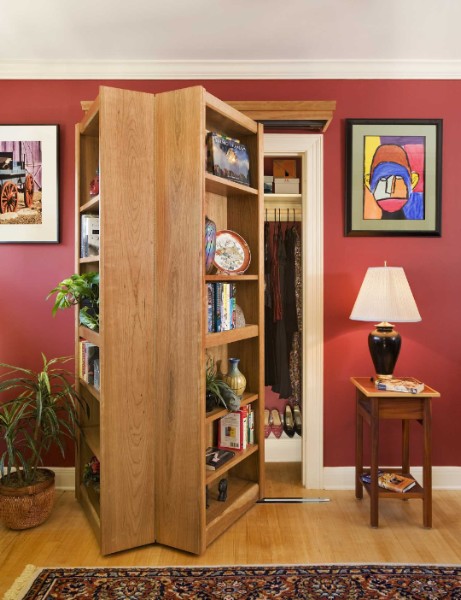
Closet doors that are actually bookcases
that can make any room
in your house a "secret room"


Vertical gardens for the gardener or
cook that likes fresh plants & flowers
but lacks the space for a traditional garden.


Have you DNA made into frameable art


Go to my Blog